Custom Software vs Off-the-Shelf: How to Decide Without Wasting a Year
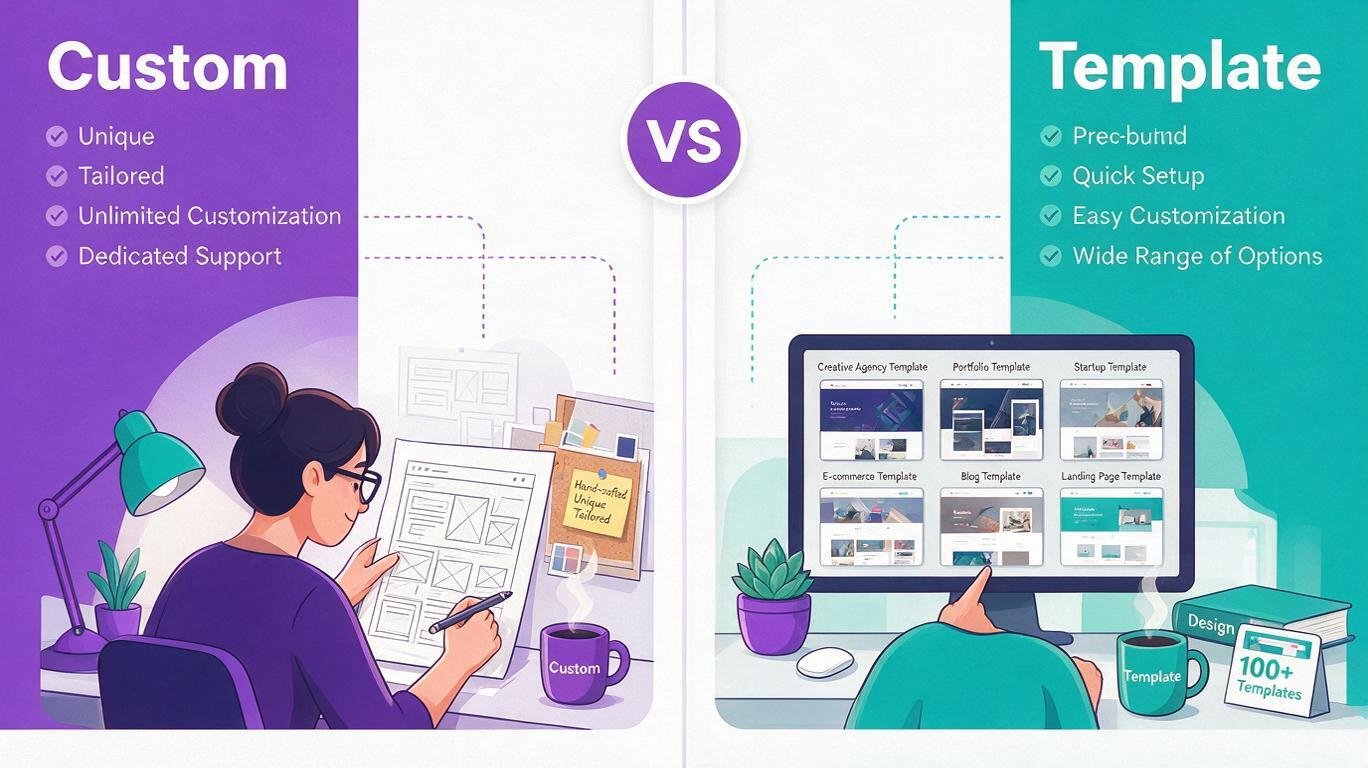
Almost every growing business hits the same fork in the road: buy a ready-made product, or build software around the way you actually work. The wrong answer is expensive in both directions — a needless custom build burns money you did not have to spend, and a badly-fitting subscription quietly taxes every hour your team works.
What off-the-shelf software is genuinely good at
Ready-made tools win when your problem is common. Accounting, email, payroll, basic CRM, file storage — thousands of companies need the same thing, so a vendor can spread the development cost across all of them and sell it to you for a fraction of what building it would cost.
- Available immediately. You can be running this afternoon.
- Low upfront cost. A monthly subscription instead of a project budget.
- Maintained by someone else. Security patches and updates are the vendor's problem.
- Battle-tested. Bugs have already been found by other customers.
Where off-the-shelf quietly fails
The trouble starts when your process does not match the template. The symptoms are recognisable:
- Your team maintains "shadow" spreadsheets alongside the official system.
- Staff manually copy data between two tools that refuse to talk to each other.
- You pay for fifty features and use six.
- The one thing you truly need is on the vendor's roadmap "for next year".
- Per-user pricing means growing your team makes your software bill grow faster than your revenue.
Each of these has a price. It just does not appear on an invoice, so it rarely gets counted.
What custom software is genuinely good at
Custom builds win when your process is the business — when the way you quote, manufacture, schedule or verify something is a competitive advantage, not an administrative detail. In that situation, forcing your work into a generic tool means throwing away the thing that makes you better than your competitors.
- Exact fit. No workarounds, no unused modules, no compromises.
- You own it. No per-seat pricing, no sudden 40% renewal, no vendor shutting down.
- Integrates with what you already have. Machines, legacy databases, government portals.
- Grows with you. Features get added when you need them, not when a product manager elsewhere agrees.
The honest costs of custom
It would be dishonest to pretend custom software is free of downsides. It is not.
- Higher upfront investment.
- A real timeline — usually four to twelve weeks for a first useful version, not four days.
- You need a maintenance plan. Software that nobody patches becomes a security liability.
- You need to be available. Good custom software requires your input during discovery and testing.
A decision checklist
Answer these honestly. If you tick three or more, custom is likely the cheaper option over three years:
- Are your staff running manual workarounds or parallel spreadsheets every week?
- Is a core part of your process impossible to represent in the tool you pay for?
- Are subscription costs rising faster than the value you get from them?
- Do you need to integrate with hardware, legacy systems, or an unusual third party?
- Would owning the system outright be a strategic advantage — or a compliance requirement?
If you tick none of them, buy the product. Genuinely. A good development partner should be willing to tell you that.
The hybrid answer nobody mentions
Most mature setups are not purely one or the other. You buy the commodity pieces — email, accounting — and build custom only where you are different. That keeps the build small, the timeline short, and the value obvious.
If you are weighing this decision, our custom software development team is happy to run through it with you — including telling you when not to build.
Need help with a project like this?
Tell us your requirement — we reply with a scope, timeline and quote within 24 hours.
Get a Free Quote →