Website Development for Startups: A Complete Guide to Building a Strong Online Presence
Starting a new business is exciting, but building credibility and attracting customers can be challenging. In today’s digital world, one of the first things potential customers, investors, partners, and employees may do is search for your startup online.
What they find can influence how they perceive your business.
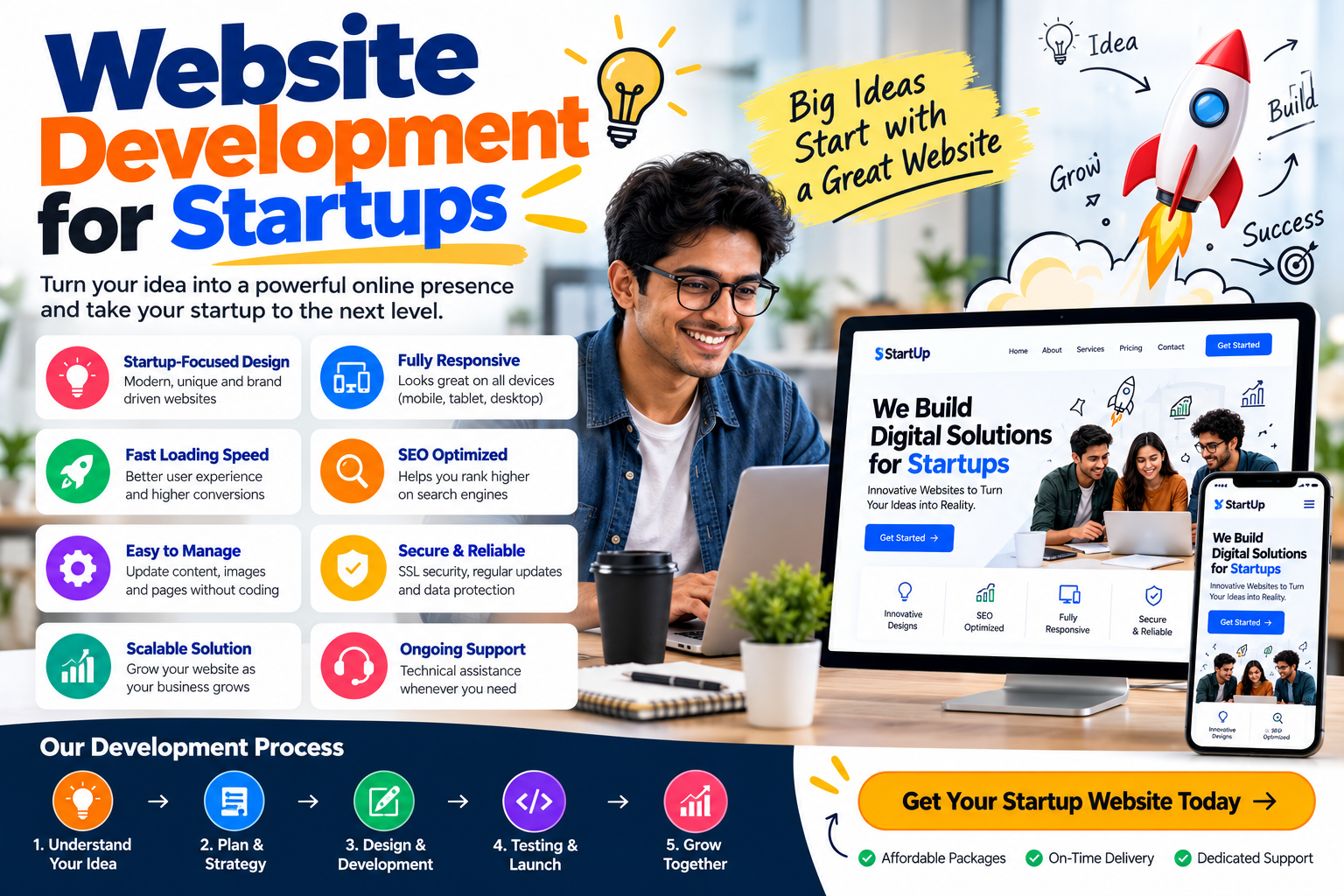
This is why website development for startups is an important part of building a strong digital presence. A professional startup website can introduce your brand, explain your product or service, generate leads, support marketing campaigns, and provide customers with a convenient way to interact with your business.
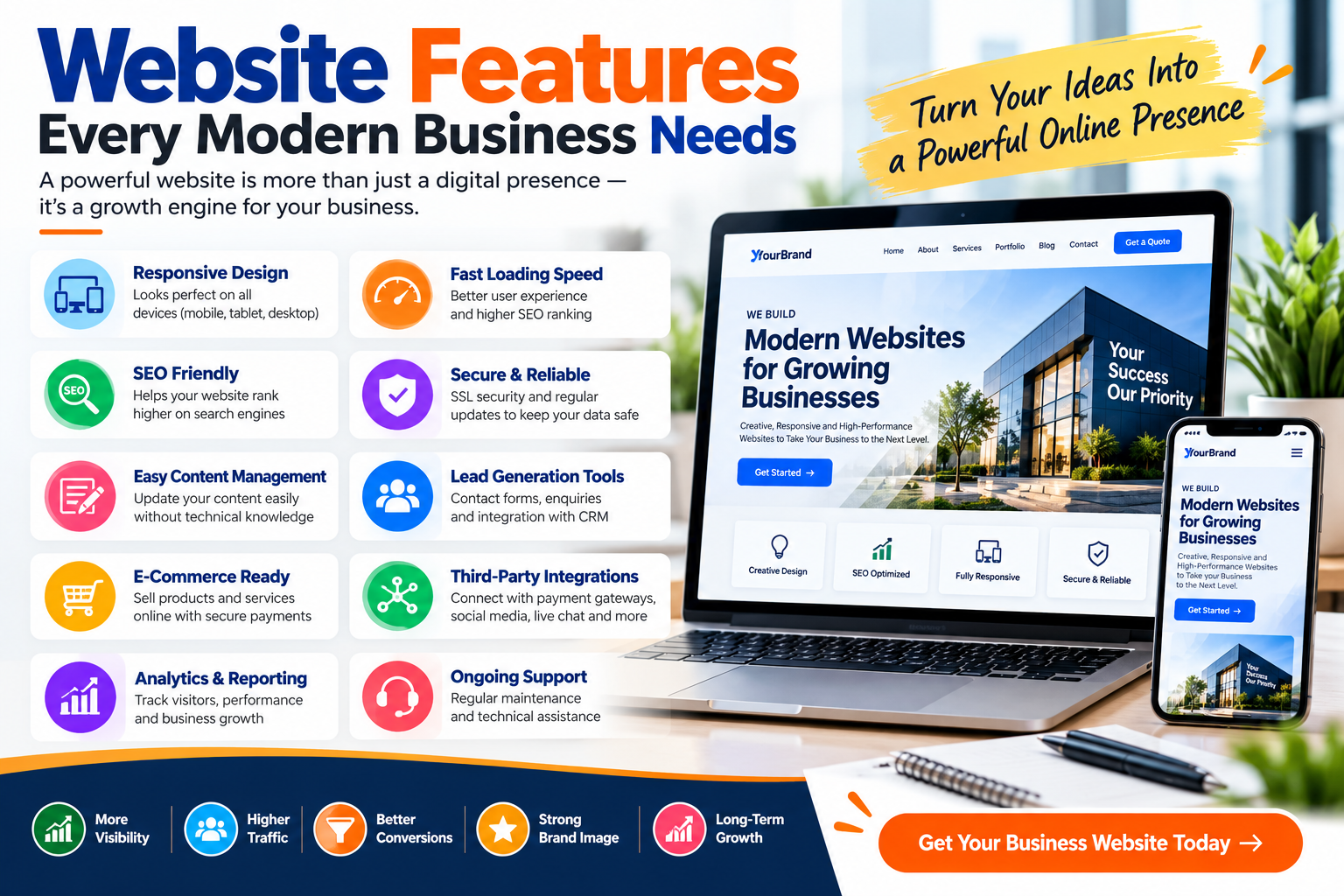
However, startup website development is not simply about creating a few attractive pages. Startups need websites that are fast, responsive, secure, scalable, SEO-friendly, easy to manage, and designed around specific business objectives.
A startup may initially need only a simple website, but as the business grows, it may require additional services, landing pages, payment systems, customer accounts, dashboards, integrations, or e-commerce functionality.
In this guide, we will explore website development for startups, essential website features, development costs and considerations, common mistakes, SEO requirements, and how startups can build websites that support long-term growth.
What Is Website Development for Startups?
Website development for startups is the process of planning, designing, developing, testing, launching, and maintaining a website specifically around the requirements of a new or growing business.
A startup website may range from a simple informational website to a sophisticated web application.
For example, a newly launched consulting company may initially need:
- Homepage
- About Us page
- Services pages
- Contact page
- Blog
- Inquiry form
A technology startup, on the other hand, may require:
- User registration
- Login system
- Customer dashboard
- Subscription plans
- Payment gateway
- API integrations
- Database
- Admin panel
- Analytics
The appropriate website depends on the startup's business model, customers, budget, growth strategy, and technical requirements.
Why Do Startups Need a Professional Website?
Social media platforms can help startups reach potential customers, but they should not necessarily replace a professional business website.
Your website provides a central digital destination that your startup can control.
A professional website allows a startup to clearly communicate its brand, products, services, pricing, contact information, and value proposition.
It can also support:
- Search engine optimization
- Digital advertising
- Content marketing
- Lead generation
- Customer support
- Product sales
- Online bookings
- Recruitment
- Investor research
- Brand credibility
For many customers, a website is one of the first opportunities to evaluate whether a new company appears professional and trustworthy.
Benefits of Website Development for Startups
| Benefit | How It Helps a Startup |
|---|---|
| Professional Online Presence | Makes the startup easier to discover and evaluate |
| Brand Credibility | Creates a more professional first impression |
| Lead Generation | Collects inquiries and potential customer information |
| SEO Visibility | Helps attract traffic through search engines |
| 24/7 Availability | Business information remains available anytime |
| Marketing Support | Provides landing pages for ads and campaigns |
| Scalability | Allows new features to be added as the startup grows |
| Customer Communication | Provides forms, FAQs, chat, and contact options |
| Analytics | Helps understand visitor behavior |
| Sales Opportunities | Can support online purchases or bookings |
1. A Website Builds Startup Credibility
New businesses often face a major challenge: trust.
Customers may not recognize a new brand. They may want to know who operates the company, what it offers, where it is located, and whether it appears reliable.
A professionally designed website can provide this information in an organized way.
A startup website can display:
- Company information
- Products and services
- Founder or team information
- Customer testimonials
- Portfolio
- Case studies
- Contact details
- Policies
- Certifications where relevant
These elements help potential customers learn more about the business before making a decision.
A poorly designed or incomplete website, on the other hand, can create unnecessary doubts about a startup.
2. Define Your Startup Website Goals
Before development begins, startups should determine exactly what they want their website to accomplish.
A website should have clear business objectives.
For example, the primary goal may be to:
- Generate leads
- Sell products
- Get app downloads
- Schedule consultations
- Collect demo requests
- Build an email list
- Promote services
- Accept bookings
- Attract investors
- Recruit employees
Different goals require different website structures.
For example, a SaaS startup may prioritize Start Free Trial and Request a Demo buttons, while a service-based startup may prioritize Get a Quote or Book a Consultation.
Defining these goals early can make the design and development process more focused.
3. Choose the Right Type of Startup Website
Not every startup needs the same type of website.
Choosing the right website depends on what the business currently needs and what it expects to need in the future.
Static Website
A static website can work for startups that need a relatively simple online presence.
It may contain a few informational pages explaining the business and its services.
Static websites can be suitable when content does not need frequent updates.
Dynamic Website
A dynamic website is useful when content needs to be regularly updated or managed through an administrative system.
This can be suitable for businesses with blogs, portfolios, services, products, news, or frequently changing content.
E-Commerce Website
Startups selling products online may need an e-commerce platform.
Important functionality may include:
- Product catalog
- Shopping cart
- Checkout
- Payment integration
- Customer accounts
- Order management
- Inventory management
Web Application
Technology startups may require more than a conventional website.
A web application can include user accounts, dashboards, subscriptions, real-time data, APIs, and other advanced functionality.
4. Responsive Website Design Is Essential
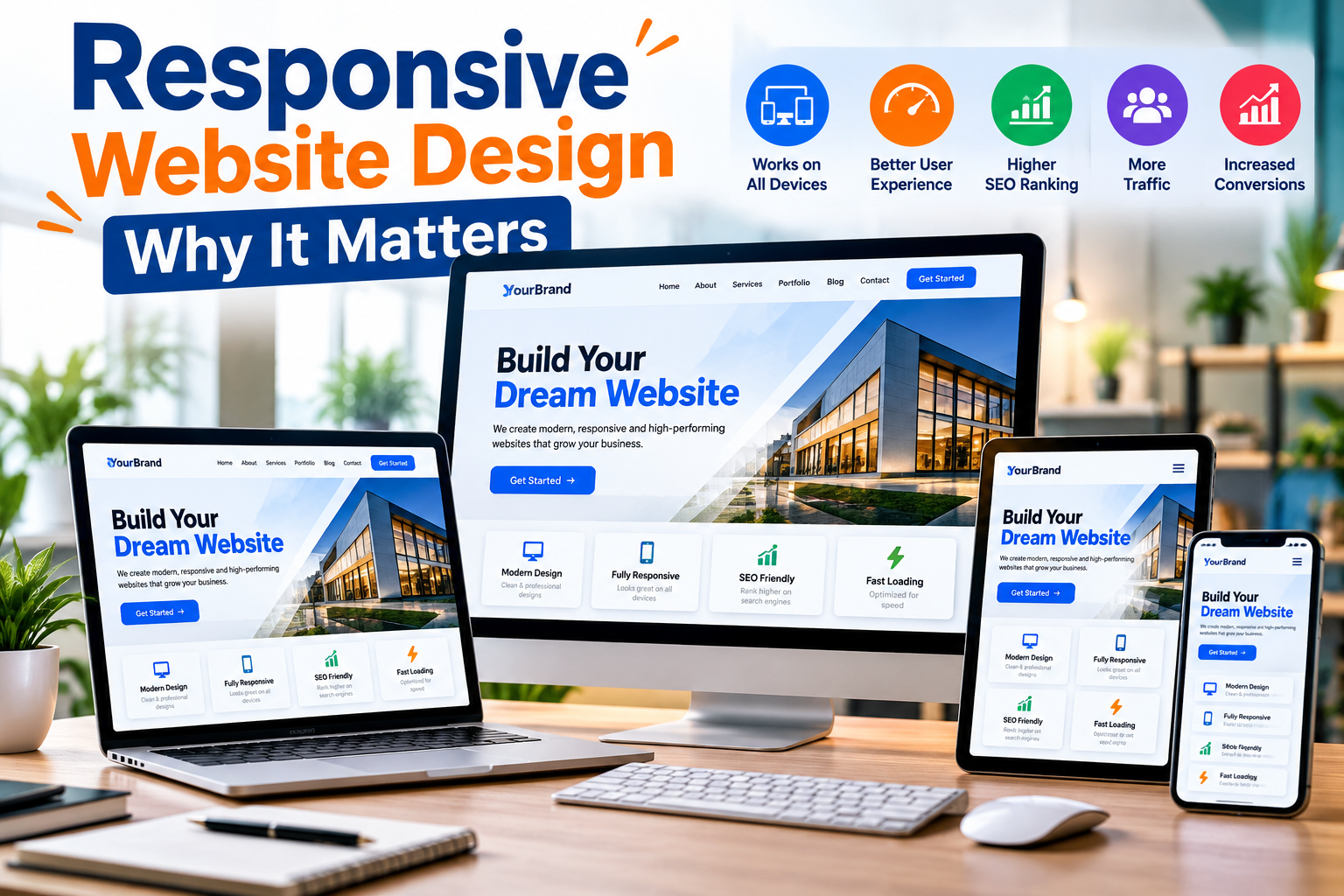
Startup customers may access a website from smartphones, tablets, laptops, and desktop computers.
The website should adapt to different screen sizes.
Responsive design helps ensure that:
- Text remains readable
- Images resize appropriately
- Navigation remains accessible
- Forms are easy to complete
- Buttons are easy to tap
- Content fits the screen
Mobile responsiveness is particularly important when a startup is running social media advertising because many users may click advertisements directly from smartphones.
A visitor who lands on a poorly optimized mobile website may leave without exploring the startup.
5. Create a Clear Value Proposition
Visitors should quickly understand what your startup does.
The top section of the homepage should communicate the primary value proposition clearly.
Instead of using vague marketing statements, explain:
What do you offer?
Who is it for?
What problem does it solve?
Why should customers choose you?
For example, rather than writing:
“Transforming Tomorrow Through Innovation”
a company could use a more specific message such as:
“Custom Web and Mobile App Development for Growing Businesses.”
The second statement gives visitors a clearer understanding of the service.
6. Use Simple Website Navigation
Startup websites should be easy to explore.
Avoid creating complicated navigation unless the amount of content genuinely requires it.
A typical startup navigation menu may contain:
- Home
- About
- Services
- Products
- Pricing
- Portfolio
- Blog
- Contact
The exact structure depends on the business.
Important pages should be accessible without requiring visitors to search through several menus.
Simple navigation improves usability and helps potential customers reach relevant information faster.
7. Include Strong Call-to-Action Buttons
Every startup website should guide visitors toward the next step.
This is where call-to-action buttons become important.
Examples include:
- Get Started
- Contact Us
- Request a Quote
- Book a Demo
- Start Free Trial
- Shop Now
- Download App
- Schedule a Call
- Learn More
The primary CTA should reflect the startup's most important conversion goal.
Calls to action can appear on the homepage, service pages, pricing pages, landing pages, and other relevant areas.
However, avoid overwhelming visitors with too many competing actions.
8. Build SEO Into the Website
SEO should be considered during website development rather than only after launch.
An SEO-friendly startup website should have a clear structure that makes content easy for users and search engines to understand.
Important elements include:
- SEO-friendly URLs
- Unique page titles
- Meta descriptions
- H1, H2, and H3 headings
- Internal links
- Image alt text
- Mobile responsiveness
- Fast loading speed
- XML sitemap
- Useful original content
- Proper redirects
- Appropriate canonical tags
Startups should also research keywords related to their products, services, and customer problems.
For example, a startup providing mobile application development may create dedicated content around relevant services instead of trying to rank every keyword through the homepage.
9. Focus on Website Speed
Website performance affects user experience.
Startups should avoid adding unnecessary design elements that make pages excessively heavy.
Performance optimization may include:
- Image compression
- Modern image formats
- Browser caching
- CSS optimization
- JavaScript optimization
- Lazy loading
- Database optimization
- Reliable hosting
- Removing unnecessary plugins
The goal should be to create a website that looks professional without sacrificing usability and performance.
10. Add Lead Generation Features
Many startup websites are designed primarily to generate leads.
Lead generation functionality may include:
- Contact forms
- Request-a-quote forms
- Demo forms
- Consultation booking
- Newsletter signup
- Callback requests
- Downloadable resources
Forms should request only information that the business actually needs.
A complicated form asking for too much information may discourage potential customers from submitting it.
11. Build Trust With Social Proof
Customers may hesitate to work with a startup they have never heard of.
Social proof can help reduce that uncertainty.
Depending on the business, a startup can display:
- Customer testimonials
- Client logos
- Reviews
- Case studies
- Project portfolio
- Awards
- Certifications
- Partnerships
New startups may not have dozens of testimonials at launch. In that case, they should focus on presenting accurate information about their team, experience, process, and capabilities rather than creating fake reviews.
Authenticity is more valuable than fabricated credibility.
12. Create Dedicated Product or Service Pages
Startups offering several services should consider creating separate pages for important offerings.
For example, a technology company may have pages for:
- Website Development
- Mobile App Development
- UI/UX Design
- E-Commerce Development
- SEO Services
- Digital Marketing
Dedicated pages allow the business to explain each service properly.
They can also improve SEO by giving search engines and users more focused information about individual services.
Each page should explain the service, benefits, process, relevant features, and next action.
13. Start a Business Blog
Content marketing can help startups build visibility over time.
A blog allows businesses to answer questions potential customers are already searching for.
Useful startup blog topics may include:
- How-to guides
- Industry trends
- Product comparisons
- Customer questions
- Business guides
- Case studies
- Tutorials
- Product updates
A web development startup, for example, might publish articles about responsive website design, website costs, SEO-friendly development, e-commerce development, and website security.
Useful content can attract visitors before they are ready to purchase.
14. Website Security for Startups
Security should be considered from the beginning.
Startup websites may collect customer names, emails, phone numbers, login credentials, payment information, or other data.
Important security practices can include:
- HTTPS
- Strong passwords
- Secure authentication
- Software updates
- Regular backups
- Form protection
- Access controls
- Security monitoring
More complex applications may require additional security measures based on the type of information they process.
Security should be treated as an ongoing responsibility rather than a one-time setup.
15. Choose a Scalable Technology Stack
Startups often grow quickly, so technology decisions should consider future requirements.
However, this does not mean every startup needs an extremely complicated architecture on day one.
The objective should be to select technology that meets current needs while providing reasonable flexibility for future expansion.
Depending on the project, development technologies might include:
- HTML
- CSS
- JavaScript
- PHP
- Laravel
- React
- Next.js
- Node.js
- Flutter
- WordPress
- Suitable database technologies
The best choice depends on project requirements rather than technology popularity.
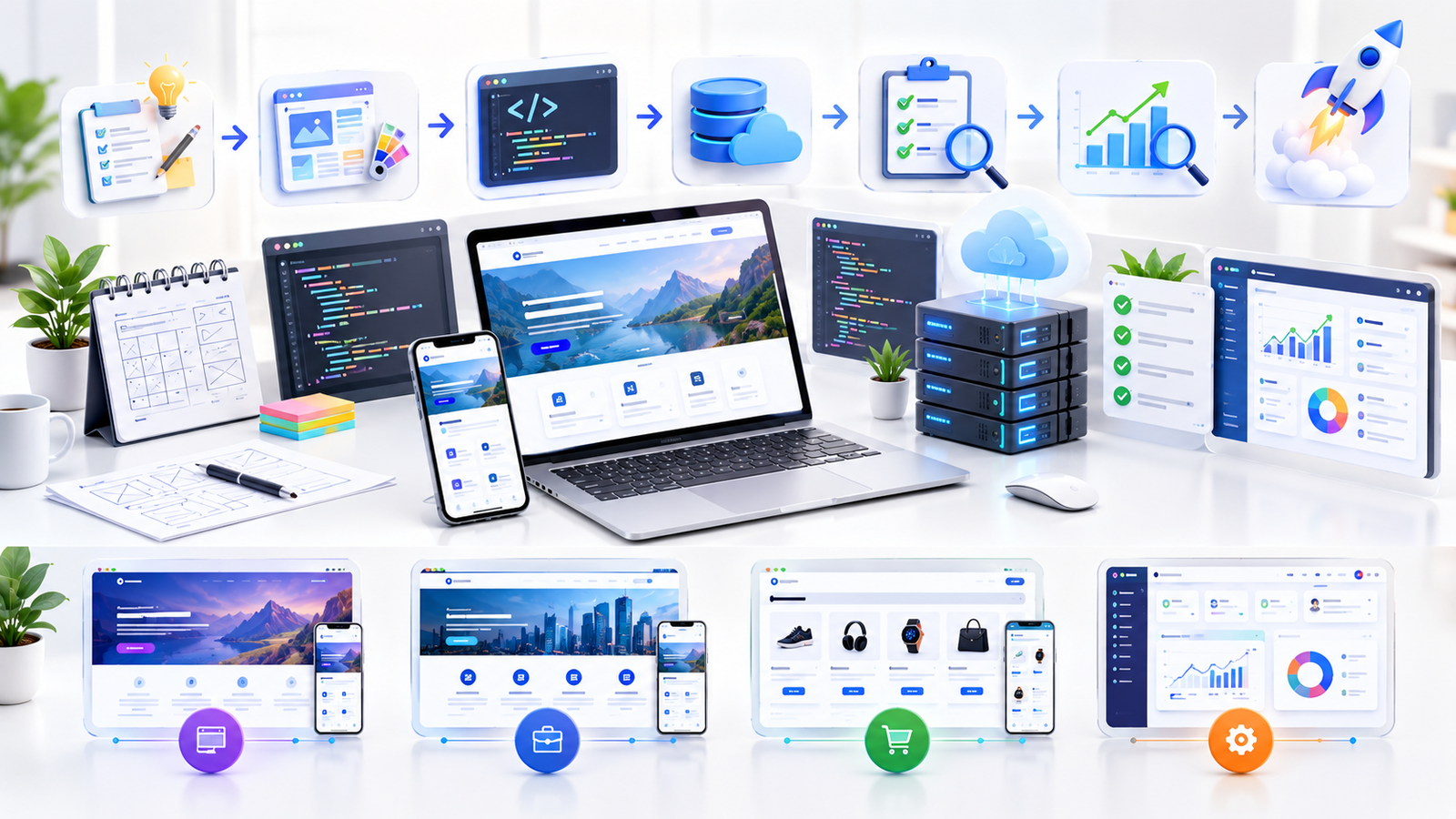
Startup Website Development Process
A structured development process can reduce confusion and costly revisions.
| Stage | Main Activities |
|---|---|
| Discovery | Understand business, customers, goals, and competitors |
| Planning | Create sitemap and feature requirements |
| UI/UX Design | Design layouts and user journeys |
| Development | Build frontend and backend functionality |
| Content | Add website text, images, products, and metadata |
| Testing | Test devices, browsers, forms, links, and functionality |
| SEO Setup | Configure URLs, metadata, sitemap, and indexing |
| Launch | Deploy website to production |
| Monitoring | Track errors, traffic, and conversions |
| Maintenance | Update content, software, security, and features |
16. Add Website Analytics
Startups should measure website performance from the beginning.
Analytics can help answer important questions such as:
- How many visitors come to the website?
- Where does the traffic come from?
- Which pages receive the most visits?
- Which devices do visitors use?
- Which landing pages generate inquiries?
- Where do users leave?
- Which marketing campaigns perform best?
This information can help startups improve their marketing and website experience.
Website decisions should increasingly be based on real visitor behavior rather than assumptions.
17. Integrate the Website With Business Tools
As a startup grows, the website may need to communicate with other business systems.
Possible integrations include:
- CRM software
- Email marketing platforms
- Payment gateways
- Customer support systems
- Appointment scheduling
- Analytics tools
- Social media
- Accounting systems
- APIs
Integrations can automate repetitive processes and reduce manual data entry.
However, startups should add integrations based on actual business requirements rather than adding every available tool.
18. Create Effective Landing Pages
Startups running advertising campaigns should create dedicated landing pages for important campaigns.
A focused landing page can include:
- Clear headline
- Product or service description
- Main benefits
- Supporting images
- Testimonials
- FAQ
- Contact or signup form
- Strong CTA
The message on the landing page should align closely with the advertisement that brought the visitor there.
For example, an advertisement promoting website development should direct visitors to a relevant website development landing page rather than an unrelated homepage section.
19. Plan for Website Maintenance
Website development does not end after launch.
Startup websites require ongoing maintenance to remain secure, accurate, and effective.
Regular maintenance can include:
- Updating content
- Updating software
- Fixing broken links
- Checking contact forms
- Monitoring website speed
- Reviewing security
- Creating backups
- Updating services and pricing
- Publishing new content
As the startup changes, the website should evolve with it.
Common Website Development Mistakes Startups Should Avoid
Startups often work with limited budgets and tight timelines, which can lead to shortcuts.
Common mistakes include:
- Building without clear goals
- Ignoring mobile users
- Using slow, oversized images
- Complicated navigation
- Too many animations
- Weak CTAs
- No SEO planning
- Poor website security
- No analytics
- No backup system
- Copying competitors
- Publishing thin or generic content
- Ignoring website maintenance
- Choosing technology only because it is trending
Avoiding these mistakes can save time and development costs later.
Startup Website: Essential Features Checklist
| Feature | Priority |
|---|---|
| Responsive Design | Essential |
| Fast Loading Speed | Essential |
| HTTPS Security | Essential |
| Contact Form | Essential |
| SEO-Friendly Structure | Essential |
| Clear CTA | Essential |
| Analytics | High |
| Testimonials | High |
| Blog | High |
| Social Media Links | Useful |
| Live Chat | Based on Business |
| Payment Gateway | For Online Sales |
| Customer Dashboard | Based on Business Model |
| Admin Panel | Based on Requirements |
| CRM Integration | Useful for Growing Startups |
How Much Does Startup Website Development Cost?
There is no single fixed cost for startup website development.
The price depends on factors such as:
- Number of pages
- Custom design requirements
- Frontend complexity
- Backend development
- E-commerce functionality
- Payment integration
- User accounts
- Admin dashboard
- API integrations
- Content requirements
- SEO setup
- Maintenance requirements
A simple informational startup website generally requires fewer development resources than a custom SaaS platform or marketplace.
Startups should therefore create a clear feature list before requesting development quotations.
Instead of selecting the cheapest option automatically, consider the website’s quality, security, scalability, maintenance requirements, and business value.
Static Website vs Dynamic Website for Startups
| Factor | Static Website | Dynamic Website |
|---|---|---|
| Best For | Simple business presence | Growing content-driven businesses |
| Content Updates | Less frequent | Frequent |
| Admin Panel | Usually not required | Often available |
| Complexity | Lower | Higher |
| Blog Management | Limited/manual | Easier |
| Scalability | Moderate | Higher depending on architecture |
| Development Time | Usually shorter | Usually longer |
| Advanced Features | Limited | More flexible |
Startups should select the option that matches their actual requirements.
Frequently Asked Questions
Why is website development important for startups?
Website development helps startups establish an online presence, communicate their value proposition, generate leads, support marketing, build credibility, and provide customers with information about products or services.
What pages should a startup website have?
Most startup websites should consider a homepage, About page, product or service pages, contact page, privacy-related pages, and relevant conversion pages. Blogs, portfolios, pricing, careers, and FAQs can be added based on business requirements.
Should a startup build a static or dynamic website?
A static website can be suitable for a simple online presence with limited updates. A dynamic website is more appropriate when content needs frequent updates or the business requires features such as an admin panel, user accounts, or database-driven content.
Should startup websites be SEO-friendly?
Yes. Building an SEO-friendly structure from the beginning can make future optimization easier and help search engines understand the website.
Does a startup need a mobile-friendly website?
Yes. Responsive design helps provide a consistent experience for visitors using smartphones, tablets, laptops, and desktop computers.
How long does it take to develop a startup website?
Development time depends on the project's scope. A small informational website can generally be completed faster than an e-commerce platform, marketplace, SaaS product, or custom web application.
Can a startup website be expanded later?
Yes, provided the website is developed with an appropriate architecture. New pages, services, integrations, dashboards, payment functionality, and other features can be added as the business grows.
Should startups invest in custom website development?
It depends on the business model. A simple startup may initially use a standard website solution, while a company with unique workflows, customer portals, integrations, or software functionality may benefit from custom development.
Conclusion
Website development for startups is an important investment in building a professional and scalable digital presence.
A startup website can help introduce the business, explain its products and services, build credibility, attract potential customers, generate leads, and support digital marketing campaigns.
However, successful startup website development requires more than attractive visuals.
Startups should prioritize responsive design, website speed, SEO, security, clear navigation, strong calls to action, useful content, analytics, lead generation, and scalability.
The development strategy should also reflect the startup's current stage. There is little value in building dozens of expensive features before customers need them. At the same time, choosing an inflexible platform can make future expansion unnecessarily difficult.
The best approach is to build a strong foundation around current business goals while leaving reasonable room for growth.
With proper planning, design, development, optimization, and maintenance, a startup website can become more than a digital profile. It can become an important tool for brand building, customer acquisition, marketing, sales, and long-term business growth.
Need help with a project like this?
Tell us your requirement — we reply with a scope, timeline and quote within 24 hours.
Get a Free Quote →