Benefits of Professional Website Development: Why Your Business Needs a High-Quality Website
In today’s digital-first business environment, a website is often one of the most important points of interaction between a company and its potential customers. Before purchasing a product, requesting a service, visiting a business location, or contacting a company, many customers research the business online.
The quality of your website can therefore influence how people perceive your brand.
A professionally developed website does much more than display basic company information. It can help establish credibility, generate leads, improve user experience, support search engine optimization, showcase products and services, strengthen branding, and create new opportunities for business growth.
This is why understanding the benefits of professional website development is important for businesses of all sizes.
While inexpensive templates and basic website builders may be suitable for some simple requirements, businesses with long-term growth goals often need greater flexibility, performance, security, scalability, and customization.
Professional website development focuses on creating a digital platform around specific business objectives rather than simply putting a few pages online.
In this article, we will explore the major advantages of professional website development, why businesses should invest in quality web development, and how a professionally developed website can support long-term digital success.
What Is Professional Website Development?
Professional website development is the structured process of planning, designing, developing, testing, launching, and maintaining a website according to specific business and user requirements.
It can involve specialists such as:
- UI/UX designers
- Frontend developers
- Backend developers
- Content specialists
- SEO professionals
- Quality assurance testers
- Project managers
Depending on the project, professional website development may include both frontend and backend technologies.
The frontend is the part of the website users directly interact with, including layouts, menus, forms, buttons, images, and other visual elements.
The backend manages behind-the-scenes functionality such as databases, user accounts, content management, APIs, authentication, and business logic.
Professional development brings these elements together to create a reliable, functional, and scalable website.
Key Benefits of Professional Website Development
| Benefit | Business Advantage |
|---|---|
| Professional Appearance | Creates a stronger first impression |
| Responsive Design | Works across different devices |
| Better Performance | Provides a faster browsing experience |
| SEO-Friendly Structure | Supports organic search visibility |
| Stronger Security | Helps protect website and user information |
| Custom Functionality | Supports specific business requirements |
| Scalability | Allows future expansion |
| Better User Experience | Makes navigation and interaction easier |
| Lead Generation | Encourages inquiries and conversions |
| Brand Consistency | Strengthens business identity |
| Integrations | Connects important business tools |
| Analytics | Supports data-driven improvements |
| Easier Maintenance | Keeps the website updated and reliable |
1. Creates a Strong Professional First Impression
Your website may be the first interaction a potential customer has with your business.
Visitors can quickly form an opinion based on the website’s design, content, navigation, speed, and overall presentation.
A professionally developed website helps create a consistent and polished first impression.
It can communicate:
- Professionalism
- Credibility
- Attention to detail
- Brand quality
- Business reliability
Poorly organized layouts, broken links, outdated information, low-quality images, and difficult navigation can create the opposite impression.
Professional website development focuses on creating a website that reflects the quality and personality of the business.
2. Builds Business Credibility and Trust
Customers generally prefer businesses they can trust.
A professional website can help establish credibility by providing transparent and useful information about the company.
Trust-building website elements may include:
- About Us page
- Contact information
- Physical address where relevant
- Customer testimonials
- Portfolio
- Case studies
- Certifications
- Team information
- Privacy policies
- Secure HTTPS connection
Customers should be able to understand who operates the business, what it offers, and how they can make contact.
Professional development helps organize these trust signals into a consistent digital experience.
3. Provides a Better User Experience
User experience, commonly known as UX, is one of the most important aspects of website development.
Visitors should be able to navigate a website without confusion.
A professional development process considers how users move between pages and complete important actions.
Good UX can include:
- Simple navigation
- Clear headings
- Readable text
- Logical page structure
- Fast loading
- Easy-to-use forms
- Clear calls to action
- Mobile-friendly layouts
When visitors can easily find the information they need, they are more likely to continue exploring the website.
A confusing experience can cause potential customers to leave before they understand what the business offers.
4. Responsive Design Across Devices
Modern users access websites through different devices and screen sizes.
These can include:
- Smartphones
- Tablets
- Laptops
- Desktop computers
Professional website development ensures that layouts adapt appropriately across these devices.
Responsive design helps keep text readable, images properly sized, menus accessible, and buttons easy to use.
For example, a desktop navigation menu may automatically change into a compact mobile menu when viewed on a smartphone.
Responsive development is particularly important for businesses receiving visitors from search engines, advertisements, social media, and messaging applications.
5. Faster Website Performance
Website speed directly influences the browsing experience.
A professional development team can optimize different areas of a website to improve performance.
Optimization may include:
- Image compression
- Proper image dimensions
- CSS optimization
- JavaScript optimization
- Browser caching
- Lazy loading
- Database optimization
- Efficient hosting configuration
- Removing unnecessary scripts
A visually attractive website should not require visitors to wait unnecessarily.
Professional development aims to balance design, functionality, and performance.
6. SEO-Friendly Website Structure
One of the major benefits of professional website development is the ability to build an SEO-friendly technical foundation.
Search engine optimization can help potential customers discover relevant website pages through search engines.
Professional developers can create structures that support SEO through:
- Clean URLs
- Proper heading hierarchy
- Mobile-friendly layouts
- Fast pages
- Internal linking
- Image optimization
- Meta information
- XML sitemaps
- Appropriate canonical tags
- Structured content
SEO also requires high-quality content, keyword research, authority, and ongoing optimization.
Professional development does not guarantee top search rankings, but it can eliminate many technical barriers that make SEO more difficult.
7. Customized Website Design
Template-based websites can be useful for basic requirements, but they may offer limited customization.
Professional development allows businesses to create websites around their specific brand and customer journey.
Customizable elements can include:
- Page layouts
- Navigation
- Color system
- Typography
- Forms
- Product displays
- Dashboards
- Customer portals
- Search functionality
- Interactive elements
The website can therefore be designed around business goals rather than forcing the business to adapt to a restrictive template.
8. Strong and Consistent Branding
A website is an important part of a company's brand identity.
Professional website development can ensure consistency across:
- Logo usage
- Brand colors
- Typography
- Images
- Icons
- Buttons
- Page layouts
- Tone of communication
Consistency makes the website easier to recognize and creates a more professional experience.
The objective is not to fill every page with logos and promotional graphics. Effective branding should support usability rather than distract from it.
9. Better Website Security
Security is an essential part of professional web development.
Business websites may collect customer information through forms, user accounts, checkout pages, or other features.
Professional development can incorporate security practices such as:
- HTTPS
- Secure authentication
- Strong access controls
- Form protection
- Regular software updates
- Secure coding practices
- Backups
- Security monitoring
Websites that handle sensitive information or transactions may require additional controls based on their business model.
Security should also continue after launch through regular maintenance and updates.
10. Custom Features and Functionality
Every business operates differently.
Professional development allows businesses to add functionality according to their requirements.
Custom features may include:
- Customer dashboards
- Appointment booking
- Online payments
- E-commerce
- Product management
- Customer portals
- User registration
- Subscription systems
- Quote calculators
- Inventory systems
- Advanced search
- Admin panels
Instead of installing unnecessary features, businesses can focus on functionality that directly supports their customers and operations.
11. Better Lead Generation
For many businesses, the primary purpose of a website is generating leads.
Professional website development can create structured conversion journeys that encourage visitors to contact the business.
Lead generation features can include:
- Contact forms
- Quote request forms
- Callback forms
- Consultation booking
- Newsletter forms
- Demo requests
- Downloadable resources
Strategically placed call-to-action buttons can guide visitors toward these forms.
Examples include:
Get a Quote
Contact Us
Book a Consultation
Request a Demo
Get Started
The website should make it clear what visitors should do when they are interested in a product or service.
12. Improved Conversion Opportunities
Website traffic is useful, but traffic alone does not create business growth.
A website should help turn relevant visitors into leads, subscribers, bookings, or customers.
Professional development can improve conversion opportunities through:
- Clear CTAs
- Simple forms
- Focused landing pages
- Professional product pages
- Trust signals
- Testimonials
- Easy navigation
- Mobile optimization
- Fast performance
Conversion optimization should be based on user behavior and measurable data.
A professionally developed website also makes it easier to test and improve these elements over time.
13. Scalability for Future Business Growth
A business website may have simple requirements today but need additional functionality in the future.
For example, a company may later want to add:
- New services
- Product categories
- E-commerce
- Multiple locations
- Customer accounts
- Payment systems
- CRM integration
- Mobile applications
- APIs
- Multilingual support
Professional website development can create a more flexible foundation for future expansion.
Scalability does not mean adding every possible feature immediately. It means making reasonable architectural decisions so future development does not require unnecessary rebuilding.
Professional Website vs Basic Website
| Factor | Professional Website | Basic Website |
|---|---|---|
| Design | Customized and strategic | Often template-based |
| Responsiveness | Optimized across devices | May be limited |
| Performance | Carefully optimized | Depends on setup |
| SEO Structure | Built with SEO considerations | May require additional work |
| Security | Planned and maintained | Often basic |
| Scalability | Designed for expansion | Can be limited |
| Integrations | Flexible | May have restrictions |
| User Experience | Strategically planned | Usually simpler |
| Testing | Multi-device and functional testing | May be limited |
| Maintenance | Structured | Often reactive |
| Business Alignment | Designed around objectives | General-purpose |
14. Business Tool Integrations
Modern websites frequently need to communicate with other business platforms.
Professional developers can integrate compatible systems such as:
- CRM
- ERP
- Email marketing
- Payment gateways
- Analytics
- Customer support
- Booking platforms
- Inventory systems
- Third-party APIs
Integrations can reduce repetitive work and improve data flow between different systems.
For example, a website inquiry can potentially be sent directly to a CRM instead of requiring staff to manually copy customer details.
15. Professional Content Management
Businesses regularly need to update their website.
A suitable content management system can allow authorized employees to manage:
- Blog posts
- Services
- Products
- Images
- FAQs
- Testimonials
- Portfolio projects
- News
- Contact information
Professional development can configure the content management experience according to the organization’s requirements.
This makes routine updates easier without giving every user unnecessary access to technical settings.
16. Analytics and Performance Tracking
Professional websites can be configured to support analytics and conversion measurement.
Businesses can track metrics such as:
- Website visitors
- Traffic sources
- Popular pages
- Device types
- Landing pages
- Form submissions
- Conversions
- User journeys
This information can help companies understand what is working and what needs improvement.
For example, if a page receives substantial traffic but few inquiries, the company may review the CTA, content, design, or form experience.
17. Competitive Advantage
A professional website can help differentiate a business from competitors with outdated or difficult-to-use websites.
Customers comparing several companies may consider factors such as:
- Website professionalism
- Service information
- Testimonials
- Portfolio
- Pricing transparency
- Ease of contact
- Mobile experience
A website alone cannot guarantee that customers will choose a business, but a poor digital experience can create an unnecessary disadvantage.
18. Better Digital Marketing Results
Most digital marketing campaigns eventually direct users somewhere.
That destination is often a website or landing page.
Marketing channels may include:
- Search advertising
- Social media
- Email marketing
- Content marketing
- SEO
- Referral campaigns
If users click an advertisement and arrive on a slow, confusing, or unprofessional page, marketing performance may suffer.
Professional website development provides a stronger destination for digital campaigns.
19. E-Commerce Opportunities
Professional development can allow businesses to sell products and services online.
E-commerce functionality may include:
- Product catalog
- Product search
- Shopping cart
- Checkout
- Payment gateway
- Customer accounts
- Order management
- Inventory integration
- Shipping options
A professionally developed e-commerce experience should also prioritize mobile usability, security, and performance.
The exact functionality depends on the type and scale of the business.
20. Easier Website Maintenance
A website requires maintenance after launch.
Professional development usually includes a more structured approach to future updates.
Maintenance activities may include:
- Security updates
- Software updates
- Website backups
- Broken-link checks
- Performance monitoring
- Form testing
- Content updates
- Error monitoring
Regular maintenance helps keep the website functional, secure, and accurate.
Professional Website Development Process
| Stage | Main Work |
|---|---|
| Discovery | Understand business goals and audience |
| Planning | Define pages, features, and website structure |
| UI/UX Design | Create layouts and user journeys |
| Development | Build frontend and backend |
| Content | Add optimized website content |
| Testing | Check functionality, devices, and browsers |
| SEO Setup | Configure metadata, URLs, and technical SEO |
| Security | Implement appropriate protection |
| Launch | Deploy the production website |
| Analytics | Track performance and conversions |
| Maintenance | Update and improve the website |
21. Better Accessibility
Professional developers can consider accessibility during website design and development.
Accessibility improvements may include:
- Keyboard navigation
- Alternative text for meaningful images
- Proper headings
- Clear form labels
- Sufficient contrast
- Descriptive links
- Accessible menus
These practices can make a website easier to use for a wider range of visitors.
Many accessibility improvements also improve general usability.
22. Reliable Website Backup
Backups are an important part of website management.
Technical problems, accidental changes, software issues, or security incidents can potentially affect website data.
A structured backup strategy can include:
- Automated backups
- Database backups
- File backups
- Off-site storage
- Recovery procedures
Businesses should also test whether backups can actually be restored.
Simply creating backup files without testing recovery can create a false sense of security.
23. Long-Term Cost Efficiency
Professional website development can require a greater initial investment than a basic template-based solution.
However, choosing the cheapest possible option may create additional costs later if the website requires constant fixes, redesigns, performance improvements, or complete redevelopment.
A properly planned website can provide long-term value through:
- Better scalability
- Easier maintenance
- Improved performance
- Stronger security
- More flexible integrations
- Better conversion opportunities
Businesses should evaluate website development based on long-term value rather than only initial price.
24. Supports Businesses of Different Sizes
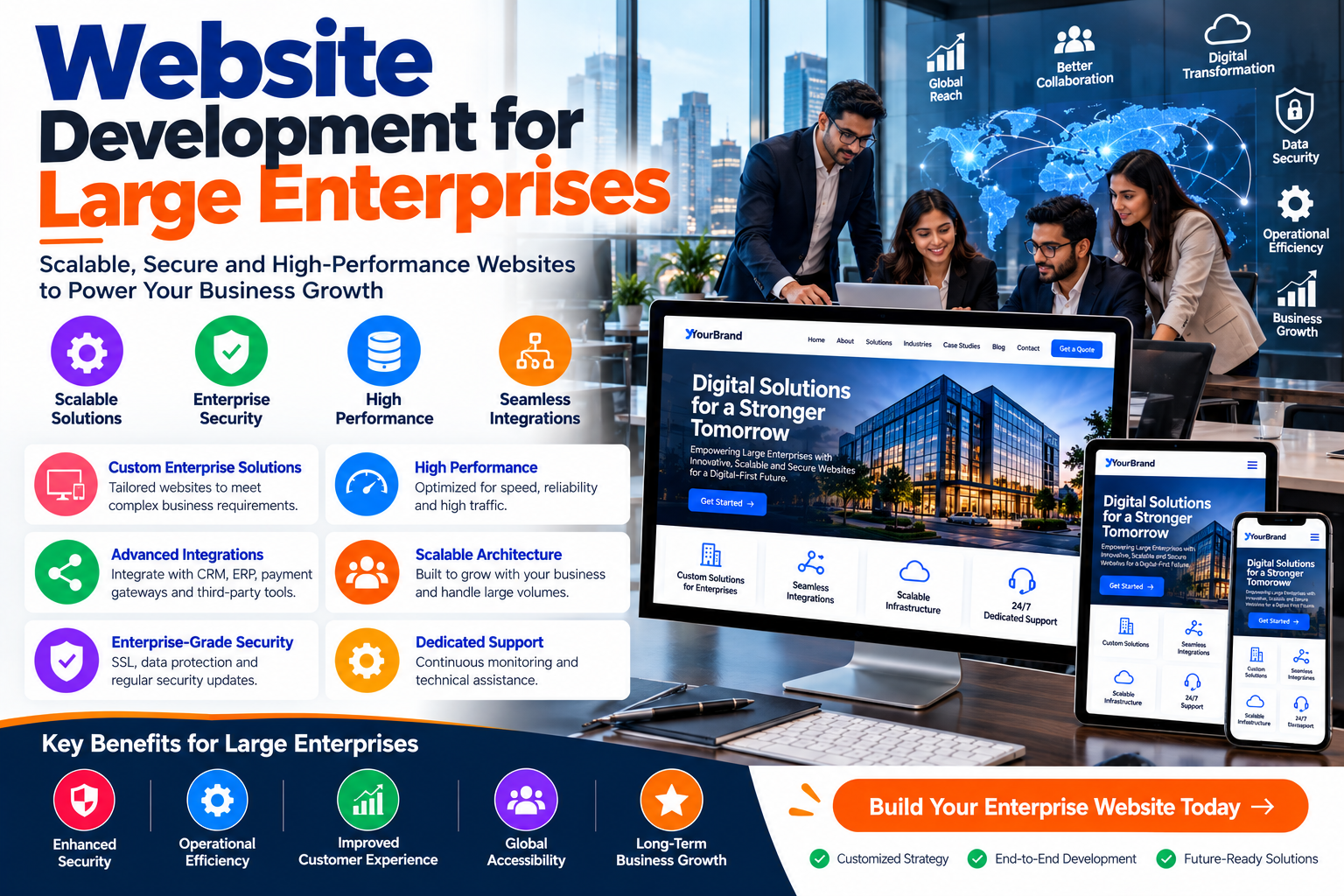
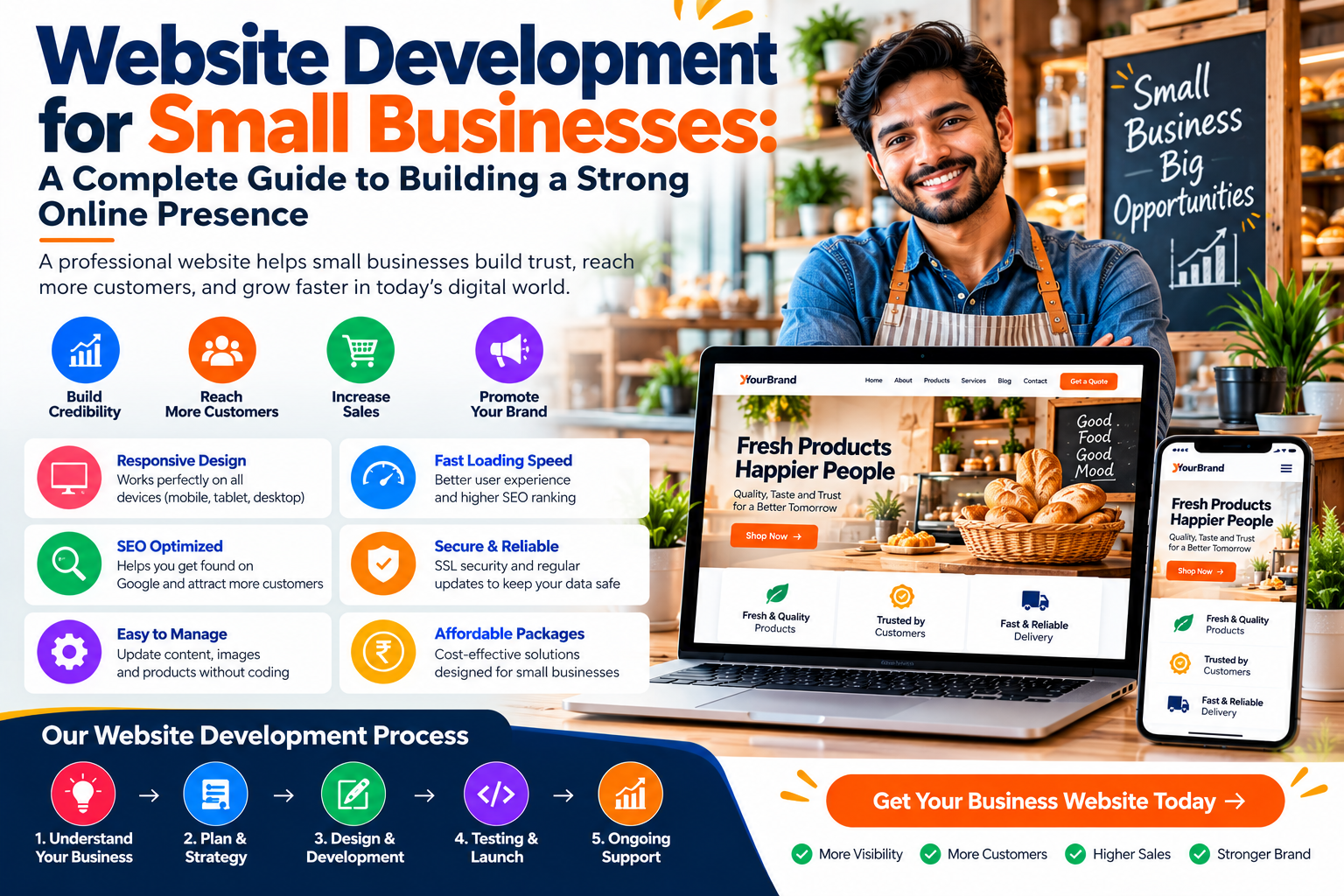
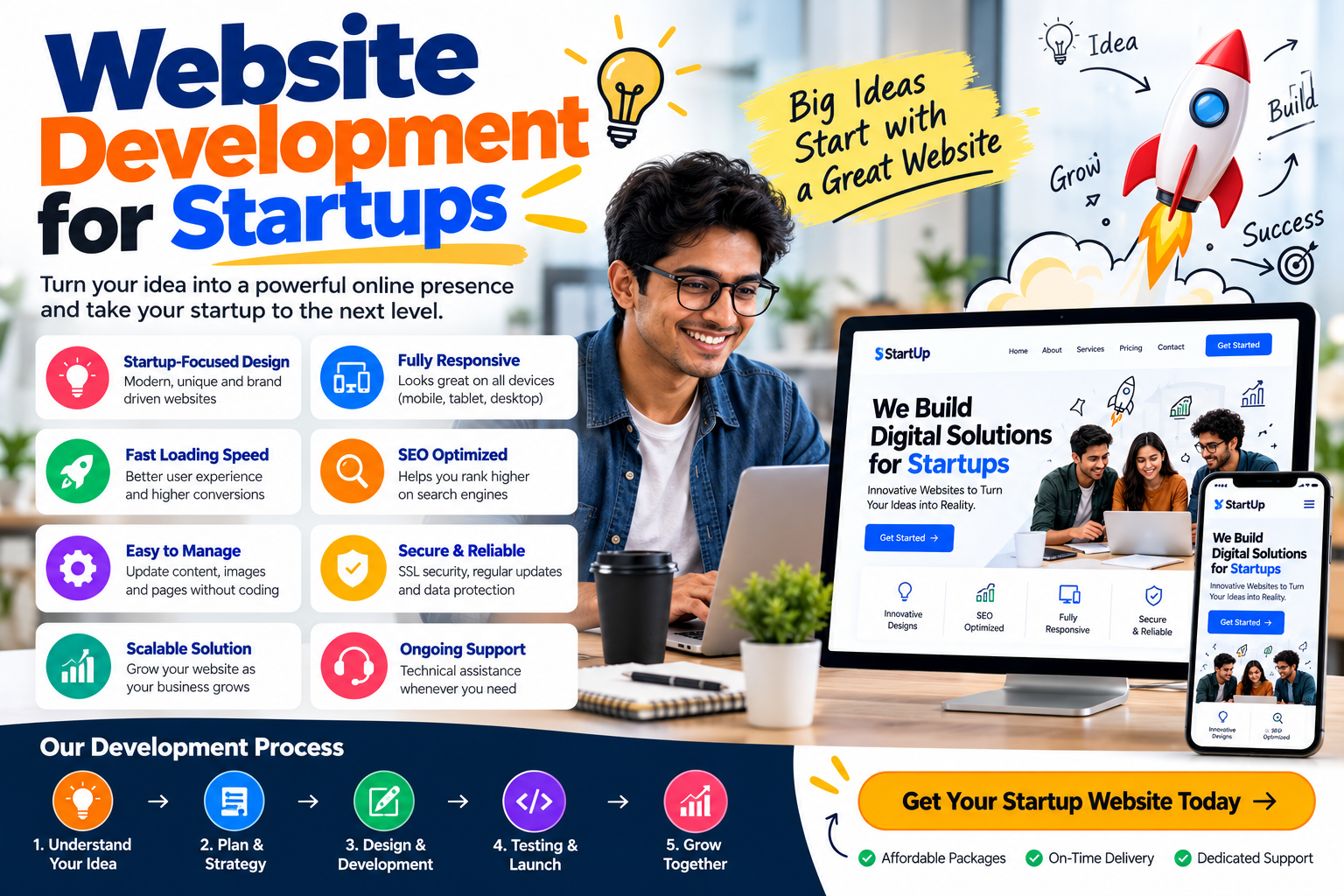
Professional website development is not limited to large enterprises.
It can benefit:
- Startups
- Small businesses
- Medium-sized companies
- Large enterprises
- E-commerce businesses
- Educational institutions
- Professional service providers
- Local businesses
The scope of development can be adjusted according to the organization's size, requirements, budget, and growth plans.
A small business may require a straightforward professional website, while an enterprise may need a complex platform with integrations and multiple user roles.
25. 24/7 Digital Presence
A professionally developed website allows customers to access business information at any time.
Visitors can potentially:
- Browse products
- Review services
- Read FAQs
- Submit inquiries
- Request quotes
- Make bookings
- Purchase products
This gives businesses an always-available digital presence even when their physical offices are closed.
The website becomes an important bridge between the company and customers outside regular business hours.
Frequently Asked Questions
What are the main benefits of professional website development?
The main benefits include professional design, responsive layouts, better performance, improved security, SEO-friendly architecture, custom functionality, scalability, lead generation, stronger branding, and easier website management.
Why should businesses invest in professional website development?
Professional development allows a website to be designed around specific business objectives, customer requirements, branding, functionality, security, and future growth rather than relying entirely on generic templates.
Does professional website development help SEO?
Yes, professional development can create a strong technical foundation for SEO through clean URLs, proper headings, responsive design, optimized performance, internal linking, metadata support, and other technical elements. Rankings still depend on many additional factors.
Is professional website development suitable for small businesses?
Yes. Professional development can be scaled according to the needs and budget of a small business. A small company does not necessarily need an expensive or complicated website to benefit from professional design and development.
Can a professional website increase sales?
A professionally developed website can improve the conditions that support sales by making products easier to discover, increasing credibility, simplifying navigation, improving mobile usability, and creating clearer conversion paths. Actual sales depend on the product, market, pricing, traffic, and other business factors.
How long does professional website development take?
The development timeline depends on the number of pages, design complexity, functionality, integrations, content, revisions, and testing requirements.
Can a professional website be upgraded later?
Yes. A properly planned website can usually be expanded with additional pages, services, products, integrations, payment systems, customer portals, and other functionality as business requirements grow.
What should I look for in a professional web development company?
Consider experience, portfolio quality, technical expertise, responsive design capabilities, SEO knowledge, security practices, communication, testing, maintenance support, and transparent pricing.
Conclusion
The benefits of professional website development extend far beyond creating an attractive online presence.
A professionally developed website can help a business improve credibility, user experience, search visibility, performance, security, lead generation, branding, conversions, and long-term scalability.
It can also serve as the foundation for other digital strategies, including SEO, social media marketing, paid advertising, email marketing, content marketing, and e-commerce.
Most importantly, professional development allows the website to be built around the actual needs of the business and its customers.
Instead of simply asking, “Does my business have a website?”, organizations should ask, “Does our website effectively support our business goals?”
A modern website should be fast, responsive, secure, easy to navigate, informative, scalable, and designed around meaningful customer actions.
When planned and maintained correctly, professional website development can transform a website from a simple digital brochure into a valuable business platform that supports customer acquisition, communication, sales, marketing, and long-term growth.
Need help with a project like this?
Tell us your requirement — we reply with a scope, timeline and quote within 24 hours.
Get a Free Quote →