How Much Does Website Development Cost in India?
It's one of the first questions every business owner asks when planning a website, and it's also one of the hardest to answer with a single number. In India, website development costs can range anywhere from a few thousand rupees to several lakhs, and the gap isn't random. It comes down to what kind of website you need, how complex it is, and who's building it. This guide breaks down the real factors that decide the price, so you know what you're actually paying for.
Typical Cost Ranges by Website Type
The single biggest factor in pricing is the type of website you need. Here's a realistic breakdown of what businesses in India typically pay:
| Website Type | Typical Cost Range (INR) | Best Suited For |
|---|---|---|
| Basic Static Website | ₹5,000 – ₹20,000 | Small businesses, portfolios |
| Dynamic / CMS Website | ₹8,000 – ₹30,000 | Blogs, businesses needing regular updates |
| E-commerce Website | ₹15,000 – ₹1,00,000+ | Online stores of any size |
| Custom Web Application | ₹50,000 – ₹5,00,000+ | Startups, complex business platforms |
These ranges are indicative and vary depending on the provider, the specific features requested, and the scale of the project. A simple one-page site and a fully custom multi-vendor marketplace both fall under "website development," but they are entirely different projects in terms of effort.
What Actually Drives the Cost
A handful of factors explain most of the price difference between a cheap website and an expensive one:
- Number of pages: A 5-page brochure site costs far less than a 50-page catalogue-style website.
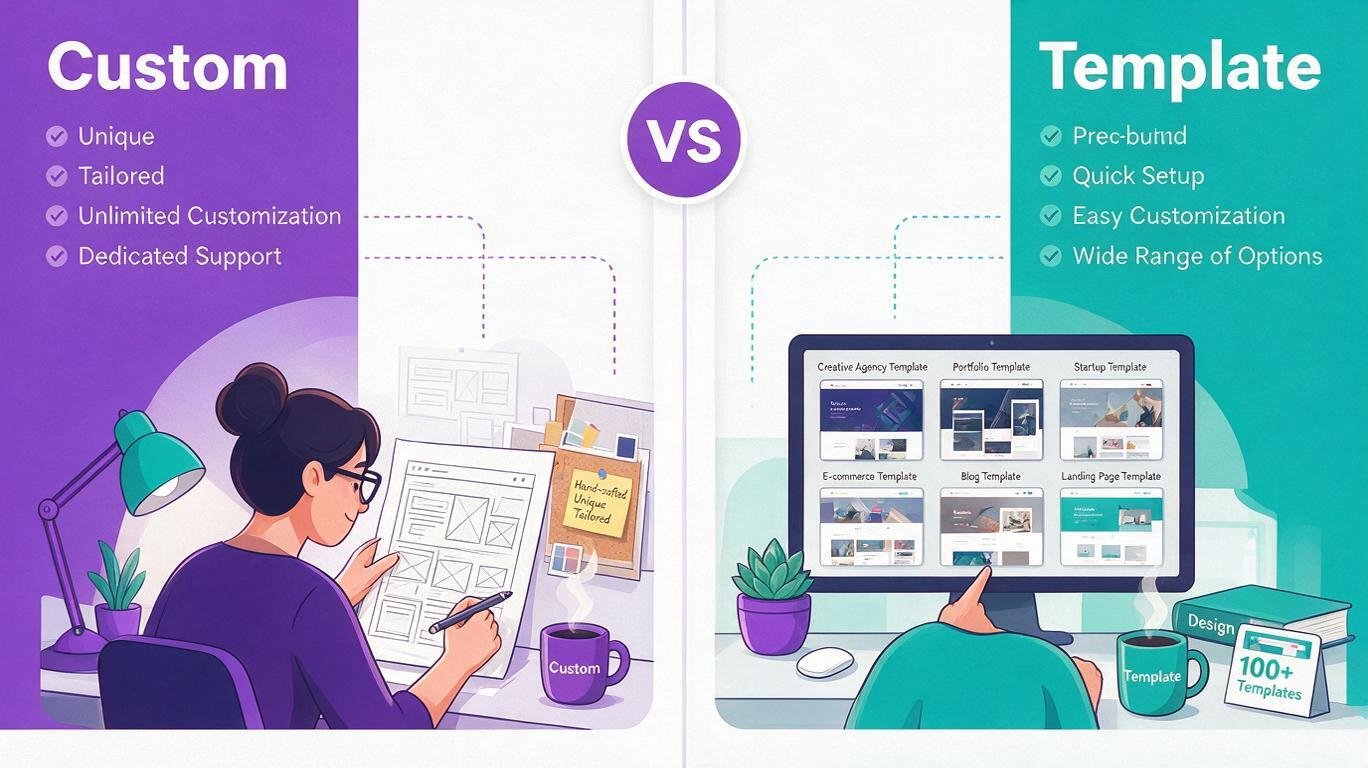
- Design complexity: A template-based design is cheaper than a fully custom, brand-specific layout built from scratch.
- Functionality: Contact forms are simple, but logins, payment gateways, booking systems, or dashboards add real development time.
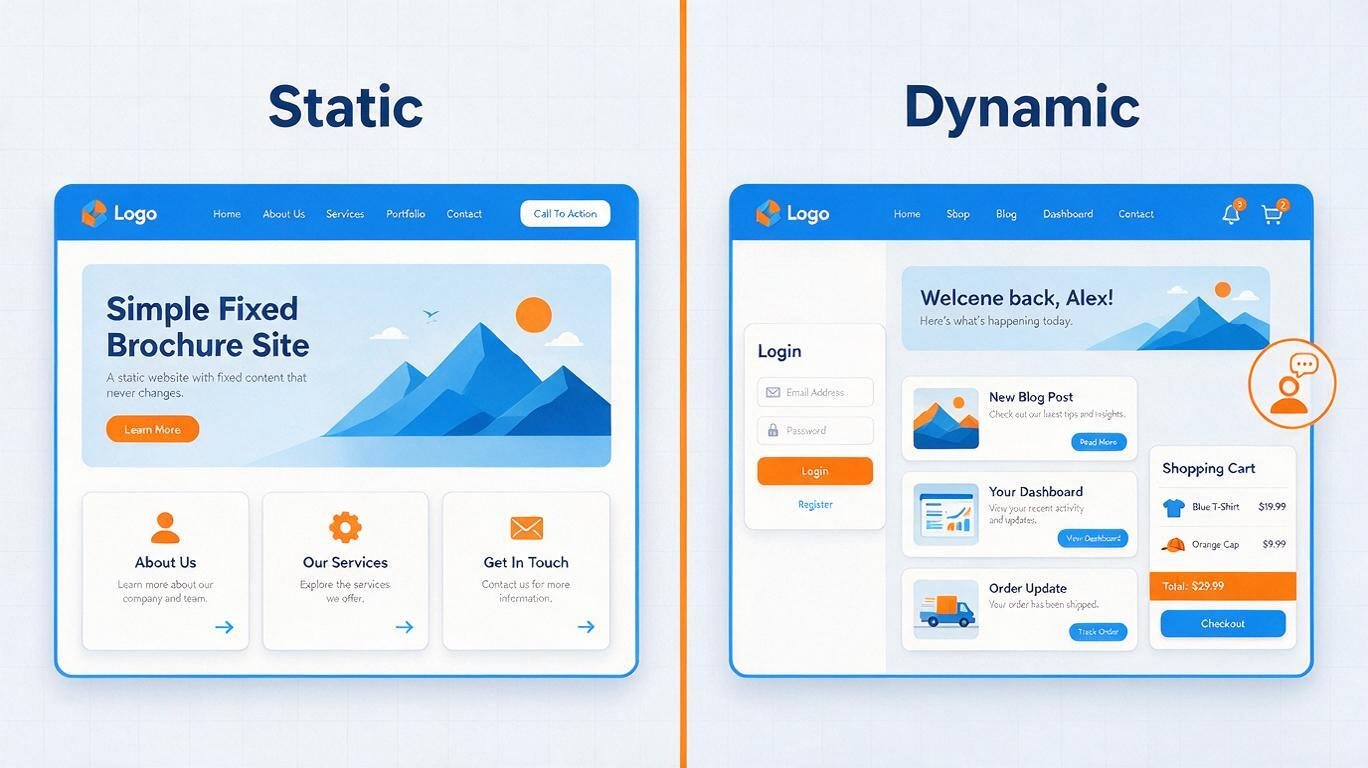
- Content management: A static site is cheaper to build than a dynamic CMS that lets you update content yourself.
- E-commerce features: Product catalogues, cart systems, and payment integration significantly increase cost over a basic informational site.
- Third-party integrations: Connecting to CRMs, analytics tools, or external APIs adds both development and testing time.
- Timeline: Rushed projects often cost more, since they require more resources working in parallel.
Freelancer vs Agency vs Website Builder
Who builds your website changes the price as much as what you're building.
Website builders (like drag-and-drop platforms) are the cheapest option, sometimes free or a few hundred rupees a month, but come with limited customisation and ongoing subscription costs.
Freelancers typically charge less than agencies since they have lower overheads, making them a reasonable option for smaller, simpler projects, though timelines and support can vary widely from person to person.
Agencies generally charge more, but bring a full team, design, development, testing, and ongoing support, which matters for larger or business-critical websites where reliability counts.
Hidden Costs to Budget For
The development cost is rarely the only expense. A few recurring costs are easy to overlook when budgeting:
- Domain name registration, typically renewed yearly.
- Web hosting, which varies based on traffic and server requirements.
- SSL certificate for security (often included with hosting, sometimes separate).
- Ongoing maintenance, updates, and bug fixes after launch.
- Content updates if you don't have a CMS to manage it yourself.
How to Budget Realistically
Rather than asking "what does a website cost," it helps to ask "what does my specific website need to do." A small business wanting a simple online presence doesn't need to spend what an e-commerce brand would on a full online store. Listing your must-have features versus nice-to-have features before requesting quotes will help you compare providers fairly and avoid paying for capability you don't actually need yet.
It also helps to think in phases rather than trying to build everything at once. Many businesses start with a solid, functional core website and add features like a blog, a customer portal, or payment integration later, once the business has validated demand and has clearer data on what visitors actually need. This phased approach spreads out cost and reduces the risk of overbuilding features that end up unused.
Why Quotes Vary So Widely Between Providers
It's common to get quotes for the same project that differ by two or three times, and this isn't necessarily a sign that one provider is overcharging or another is cutting corners. Differences usually come down to what's included, some quotes bundle in design revisions, content writing, SEO setup, and post-launch support, while others price only the bare development work and treat everything else as an add-on. Always ask for a clear breakdown of what's included before comparing numbers side by side, since the lowest quote on paper isn't always the lowest cost once extras are added back in.
Is It Worth Paying More Upfront?
For a business that depends on its website for leads, sales, or credibility, spending a bit more upfront for a well-built, properly tested site often pays off over time. A poorly built cheap website can end up costing more in the long run through lost customers, security issues, or a full rebuild within a year or two. That said, overpaying for features you don't need isn't smart either, the goal is matching the investment to what the website actually needs to achieve for your business.
Final Thoughts
Website development costs in India span a wide range because "a website" can mean very different things depending on the business behind it. The best approach is to be clear about your actual requirements, compare quotes based on what's included rather than just the final number, and remember that the cheapest option upfront isn't always the most cost-effective once maintenance, scalability, and support are factored in.
Frequently Asked Questions
What is the minimum cost of website development in India?
A very basic static website with a handful of pages can start from around ₹5,000 to ₹8,000, though this typically excludes hosting, domain, and ongoing maintenance.
How much does a business website cost in India?
A professional business website with a clean design and standard pages generally falls between ₹10,000 and ₹30,000, depending on whether it's static or includes a content management system.
Is website development expensive in India compared to other countries?
Website development in India is generally more affordable than in the US, UK, or Europe for comparable quality, which is why many international businesses also outsource development work to Indian developers and agencies.
Does website cost include hosting and domain?
Not always. Many development quotes cover only the build itself, while domain registration, hosting, and SSL certificates are billed separately, usually on a yearly basis. Always confirm this before comparing quotes.
Should I choose the cheapest website development option?
Not necessarily. The cheapest quote may exclude essentials like mobile responsiveness, SEO setup, or post-launch support, which can cost more to add later than if they were included from the start.
Need help with a project like this?
Tell us your requirement — we reply with a scope, timeline and quote within 24 hours.
Get a Free Quote →